
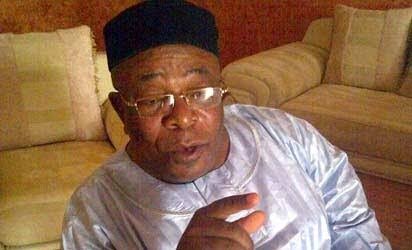
A Personal Reminiscence
On 27th August 2026, Edo State will mark the 35th anniversary of its creation. For me, this anniversary is more than a celebration of the existence of a state. It is an occasion to remember a historic struggle, the men and women who led it, the sacrifices that sustained it, and the collective determination that eventually transformed an aspiration into political reality.
I was privileged to be part of that historic journey as Secretary of the Steering Committee of the Movement for the Creation of Edo State.
Thirty-five years after the birth of Edo State, I believe it is important to preserve the story of how the movement began and the contributions of those who made it possible. History should not merely record the date on which a state was created; it should also remember the people whose vision, courage, influence and perseverance made its creation possible.
The Oba Who Saw the Danger
At the heart of the movement was the late Omo N’Oba N’Edo Uku’Akpolokpolo, Oba Erediauwa, the Oba of Benin.
According to the late Prince Edun Akenzua’s account, the origins of the movement can be traced to a concern expressed by the Oba about the growing agitation by other ethnic groups for the creation of new states out of the then Bendel State.
Aniocha, Anioma and Delta were among those seeking separate states, and their proposed maps included portions of Edo territory.
The Oba was concerned that while other groups had every right to agitate for states of their own, they should not do so at the expense of Edo land.
It was against this background that the Oba summoned Prince Edun Akenzua and Barrister Alfred Eghobamien to the palace for discussions. The meeting, according to Prince Akenzua, lasted about two hours. The Oba asked them to reflect on the matter.
Four weeks later, the Oba invited 11 traditional rulers and 35 prominent Edo citizens to constitute the Steering Committee of the Movement for the Creation of Edo State.
The 35 prominent Edo citizens listed by Prince Akenzua were:
Prince Yemi Eweka, Prince Edun Akenzua, Chief R.O. Ize-Iyamu, Joshua Aiwerioghene, Edoba Aikpitanyi, D.E. Enomayo, Dr. Nosa Omoregie, E.E. Osifo, G.A. Aghahowa, C.I. Idehen, Courage Ogbebor, Alhaji Ikponmwosa, B. Ohonbamu, Hon. A.I. Iyen, Hon. R. Owie, Odion Ugbesia, A.O. Eghobamien, J.A. Aiyeki, C.O. Eboigbe, Chief G.U. Ibhaze, L.E. Egbemokhaye, Rev. Canon F.A. Eborieme, Chief Anthony Enahoro, Deacon S.E.O. Osime, B.O.E. Osagie, J.B. Momoh, L.L. Borha, Barrister Andy M. Ayemoba, Prince Albert J. Okojie, I. Olowu, E.O. Enoboifo, Prince Vincent Omo-Oribhabor, Mr. S.S. Obaro, Mr. F.O. Idiamo and Mr. F.A. Okoyomo.
Together with the 11 traditional rulers, these men constituted the Steering Committee.
The committee met every two weeks at the palace, with the Oba himself presiding.
That was the beginning of a movement that would eventually change the political map of Nigeria.
My Role as Secretary
I served as Secretary of the Steering Committee, a responsibility that placed me at the centre of much of the movement’s organisational work.
As Prince Akenzua recalled in his account, when the need arose to prepare the formal request for the creation of Edo State, I “dashed indefatigably” to members of the committee, putting the necessary papers together.
Those were demanding days.
The task required consultations, documentation, coordination and constant communication with members of the committee. We understood that the demand for state creation had to be properly articulated and formally presented to the appropriate authorities.
It was a collective effort, and I was privileged to play a role in coordinating that effort.
Chief Anthony Enahoro: A Nationalist in the Struggle
Among the outstanding figures in the movement was Chief Anthony Enahoro, one of Nigeria’s foremost nationalists and political thinkers.
Chief Enahoro was not simply a member of the committee. He served as Vice-Chairman and, whenever traditional matters prevented the Oba from attending, he acted as Chairman.
His stature brought considerable political weight to the movement.
Prince Akenzua recalled that, following the presentation of the request to the National Assembly, Chief Enahoro was particularly elated. He expressed the hope that, when Edo State was created, it might become the only state in Nigeria to use its indigenous language, Edo, in official transactions and deliberations.
That observation reveals something about Enahoro’s vision. For him, state creation was not merely about political boundaries. It was also about identity, culture and the assertion of the dignity of the Edo people.
Prince Edun Akenzua: Chronicler and Organiser
The contribution of Prince Edun Akenzua was equally significant.
Apart from being a member of the Steering Committee, he chaired the Publicity and Information Sub-Committee and played an important role in organising the public launch of the movement.
His later account of the struggle has become an invaluable historical record. It is because of his careful recollection that many details of the movement—including the early meetings at the palace, the visit to the National Assembly, the launch at Ogbe Stadium and the role of Chief Gabriel Igbinedion—have been preserved for posterity.
His decision to document these events has allowed subsequent generations to understand that the creation of Edo State was the product of deliberate planning and sustained effort.
Chief Gabriel Igbinedion and the Journey to Lagos
Another central figure was Chief Gabriel Igbinedion, the Esama of Benin.
Interestingly, Prince Akenzua’s account makes an important distinction: although the Esama was not a member of the Steering Committee, his influence and connections became invaluable to the movement.
When the committee was considering how to secure access to the National Assembly, the Oba asked whether anyone had a means of reaching the National Assembly.
The Esama indicated that the then Senate President, Dr. Joseph Wayas, was his personal friend and had previously worked in one of his companies.
The Oba consequently asked the Esama to facilitate an appointment.
He did so.
The result was a meeting with the National Assembly leadership in Lagos, which was personally led by the Oba of Benin.
Prince Akenzua recalled that Dr. Wayas gave the Oba’s delegation a warm reception and personally accompanied the Oba to his car, setting aside normal protocol.
That encounter was an important moment in the journey towards statehood.
For this reason, I believe Dr. Joseph Wayas deserves to be remembered as one of the important national figures who facilitated the process that eventually led to the creation of Edo State.
The Ogbe Stadium Launch
The public launch of the movement was another defining moment.
The old Ogbe Stadium was selected as the venue. The committee stipulated that the Chief Launcher should contribute a minimum of ₦50,000, which was an enormous amount of money at the time.
The organisers initially struggled to identify someone willing to take on the responsibility.
Prince Akenzua’s account gives a fascinating description of how the problem was eventually resolved.
Chief Gabriel Igbinedion offered to provide the ₦50,000 himself.
His dramatic arrival at the stadium in a horse-drawn chariot with his wife, Lady Cherry, became one of the memorable moments of the launch.
But beyond the drama was the substance of his contribution.
He brought the promised ₦50,000, presented in crisp ₦1 notes, and insisted that the money be counted publicly so that nobody would question whether the full amount had been provided.
The Oba, in solidarity, reportedly told the gathering that if anyone doubted what the Esama had done, they should cite him as their witness.
The contribution was more than financial. It demonstrated the Esama’s personal commitment to the cause.
Prince Akenzua’s account further reveals that the Esama had brought a second box containing another ₦50,000, in case another person had also offered the stipulated amount.
That gesture captures the spirit of commitment that characterised the movement.
Prince Albert Okojie: A Trusted Member of the Committee
Among the 35 prominent Edo citizens on the Steering Committee was Prince Albert J. Okojie of Uromi.
Prince Albert made his contribution as a member of the committee and, as I have previously recalled, served as Treasurer and as an alternate signatory to the movement’s account with the New Nigeria Bank, alongside the Oba of Benin as the other signatory.
His contribution deserves to be acknowledged as part of the collective effort.
But the larger story is the movement itself and the combined contribution of all those who served it. Prince Albert was one of many important members whose individual efforts strengthened the movement.
The Eleven Traditional Rulers
The Steering Committee was unique in another respect: it included 11 traditional rulers, demonstrating that the agitation for state creation enjoyed the support of traditional institutions across the territory.
They were:
- Onojie of Uromi
- Onojie of Ekpoma
- Ima of Somorika
- Onibillo of Ibillo
- Ogiotua of Imua
- Otaru of Igarra
- Onojie of Ekpon
- Onojie of Ewohimi
- Okumagbe of Iuleha
- Clan Head of Warrake
- Okuokpillagbe of Okpilla
Their participation gave the movement a broad traditional foundation and demonstrated that the demand for Edo State transcended partisan political interests.
From Aspiration to Statehood
After the consultations, mobilisation, documentation and political engagements, the long struggle eventually bore fruit.
On 27 August 1991, the Federal Military Government under General Ibrahim Babangida created Edo State from the former Bendel State, with Benin City as its capital.
For those of us who had participated in the movement, the announcement represented the fulfilment of a dream.
It was not simply the creation of another administrative unit. It was the culmination of a movement that had begun with a concern about the territorial integrity and political future of the Edo people.
The dream had become reality.
Thirty-Five Years On
As Edo State turns 35, we should remember that states do not create themselves.
Behind every state are people who conceived the idea, organised the movement, mobilised support, raised resources, negotiated with authorities and persevered when success was uncertain.
In the case of Edo State, the story belongs first and foremost to Oba Erediauwa, whose vision and leadership gave the movement its foundation and direction.
It belongs to Chief Anthony Enahoro, whose political stature and nationalist credentials strengthened the struggle.
It belongs to Prince Edun Akenzua, whose organisational and publicity work helped drive the movement and whose later writings have preserved its history.
It belongs to Chief Gabriel Igbinedion, whose influence and resources were instrumental at critical moments, particularly in facilitating access to the National Assembly and supporting the public launch.
It belongs to Dr. Joseph Wayas, whose position as Senate President and his reception of the Oba’s delegation helped advance the cause at the national level.
It belongs to the 11 traditional rulers and 35 prominent Edo citizens who constituted the Steering Committee.
And it belongs to the countless Edo men and women whose support gave the movement its popular legitimacy.
I am deeply grateful that I was able to play a part in this historic chapter as Secretary of the Steering Committee.
A Debt to History
Thirty-five years after the creation of Edo State, we owe it to succeeding generations to preserve the history of how our state came into being.
We should not allow partisan politics, personal rivalries or the passage of time to erase the contributions of those who came before us.
The creation of Edo State was a victory of vision over uncertainty, unity over division, and perseverance over discouragement.
Those of us who participated in the struggle have a responsibility to tell the story as faithfully as we can.
For me, the 35th anniversary is therefore not merely a celebration.
It is a moment of remembrance.
A moment of gratitude.
And a moment to honour the men and women who helped make the dream of Edo State a reality.
Thirty-five years after its birth, Edo State remains a monument to their vision, courage and collective determination.
Elder (Sen) Odion Ugbesia
Excerpt from my memoir