
By The9jaTREND
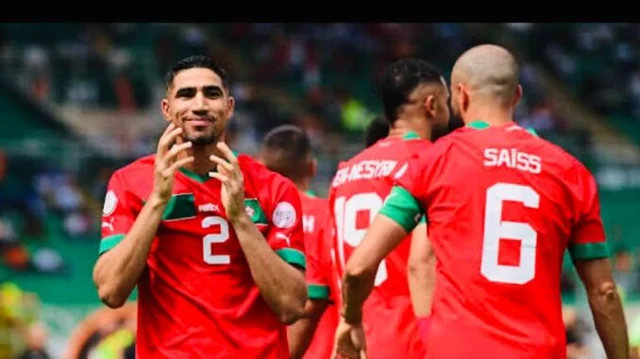
Morocco have consolidated their position as Africa’s highest-ranked football nation in the latest FIFA Men’s World Rankings, further underlining the country’s remarkable rise as the continent’s new football powerhouse.
The latest rankings, released after the July international window and the conclusion of the quarter-final stage of the 2026 FIFA World Cup, place the Atlas Lions sixth in the world, comfortably ahead of every other African nation and among the elite teams globally.
The rankings also reflect the growing competitiveness of African football, with traditional powerhouses Morocco, Nigeria Senegal, Egypt, Algeria and Ivory Coast maintaining their positions among the continent’s leading football nations despite mixed fortunes at the World Cup.
Morocco rise to sixth in the world is another testament to years of deliberate investment in football development, grassroots programmes, modern infrastructure and youth academies.
The Atlas Lions, Morocco have enjoyed an impressive run over the past few years, beginning with their historic semi-final appearance at the 2022 FIFA World Cup in Qatar, where they became the first African nation to reach the last four of the global showpiece.
Although they could not replicate that feat at the 2026 tournament, Morocco once again emerged as Africa’s best-performing nation after progressing from the group stage, defeating the Netherlands in the knockout round before overpowering co-hosts Canada 3-0 to reach the quarter-finals.
Their campaign eventually came to an end following a 2-0 defeat to France, but their performances reinforced their status as one of the most consistent national teams in world football.
Football analysts have continued to describe Morocco as the benchmark for African football, citing the country’s long-term planning, investment in coaching education and player development as major factors behind their sustained success.
Senegal retained their position as Africa’s second-highest ranked team and occupy 18th place in the global standings.
Despite failing to make a deep run at the 2026 FIFA World Cup, the Teranga Lions continue to command respect across world football following years of consistent performances in major competitions.
The West Africans have remained one of the continent’s strongest sides since lifting the Africa Cup of Nations title and have consistently qualified for major international tournaments. fifa.com
Their squad, made up largely of players featuring in Europe’s biggest leagues, continues to provide optimism that Senegal will remain a major force in African football for years to come.
Seven-time African champions Egypt remain Africa’s third-best ranked nation after securing 24th place globally.
Although the Pharaohs endured a disappointing World Cup campaign that ended in the group stage, their performances in qualifiers and international fixtures over the ranking period were enough to preserve their position among Africa’s elite.
The latest ranking is expected to provide some encouragement for Egyptian football authorities as they begin rebuilding ahead of future competitions.
With one of the richest football histories on the continent, Egypt remain one of the favourites to challenge for honours whenever major tournaments are held.
Nigeria’s Super Eagles occupy fourth position in Africa and are ranked 26th globally.
While the latest rankings reaffirm Nigeria’s status as one of Africa’s football heavyweights, many supporters believe the team has yet to maximise its enormous potential.
The three-time African champions travelled to the 2026 FIFA World Cup with high expectations but failed to progress beyond the group stage after inconsistent performances.
Despite the disappointing outing, Nigeria continue to possess one of the strongest squads on the continent, with several players competing regularly in Europe’s top leagues.
Football stakeholders have continued to call for reforms in coaching, administration and player management to ensure the Super Eagles return to challenging for major honours.
Algeria complete Africa’s top five after climbing to 29th in the world.
The Desert Foxes have continued to rebuild following previous disappointments and remain one of Africa’s most technically gifted national teams.
Their blend of experienced internationals and emerging youngsters has positioned them as serious contenders for future continental competitions.
Defending Africa Cup of Nations champions Ivory Coast occupy sixth place in Africa and 31st globally.
The Elephants continue to enjoy the rewards of their resurgence after winning the continental title and remain one of Africa’s strongest football nations.
The Democratic Republic of Congo are ranked seventh in Africa and 41st in the world.
The Leopards have quietly developed into one of the continent’s most competitive teams, with many of their players featuring in Europe’s top divisions.
Cameroon, Africa’s most successful World Cup representatives historically, occupy eighth position on the continent and are ranked 43rd globally.
Although the Indomitable Lions have experienced inconsistent performances in recent years, they remain one of Africa’s most respected football nations and continue to produce players capable of competing at the highest level.
Mali are ranked ninth in Africa and 53rd globally following another period of steady progress.
The West Africans have built one of the continent’s strongest youth development systems, producing talented players who continue to excel across Europe.
South Africa round off Africa’s top 10 after climbing to 54th in the global rankings.
Bafana Bafana were among Africa’s surprise packages at the 2026 FIFA World Cup, progressing beyond the group stage before eventually exiting in the knockout rounds.
Their improved performances have renewed confidence in South African football and strengthened hopes that the country is returning to the top level of the African game.
The latest FIFA rankings once again underline the increasing competitiveness of African football.
While Morocco have established themselves as the continent’s undisputed leaders, the relatively small gap separating Senegal, Egypt, Nigeria, Algeria and Ivory Coast suggests that the race for continental supremacy remains wide open.
With the qualification campaign for future FIFA tournaments and the next Africa Cup of Nations already gathering pace, Africa’s leading football nations will be eager to improve their rankings further while continuing their pursuit of global success.
For now, Morocco remain the standard-bearers of African football, but the battle among the continent’s traditional giants promises to become even more intense in the months ahead.
…Source: Blueprint