
My heart echoes, but too distant for the ears to hear! And you may ask, “which ears?” – The ears of those saddled with the responsibility and power to implement policies. Growing up in the streets of Benin presented us a lot of memories. You look at a building and the art that defines it, at once, you know the kind of people that inhabits it. Every family has its symbol and greeting, and you live to preserve that heritage. Benin kingdom is known to be rich in heritage, and it boasts of rich structural, economic and cultural history. The Benin Kingdom was a powerful West African state that was founded by the Edo people in now modern day Nigeria.
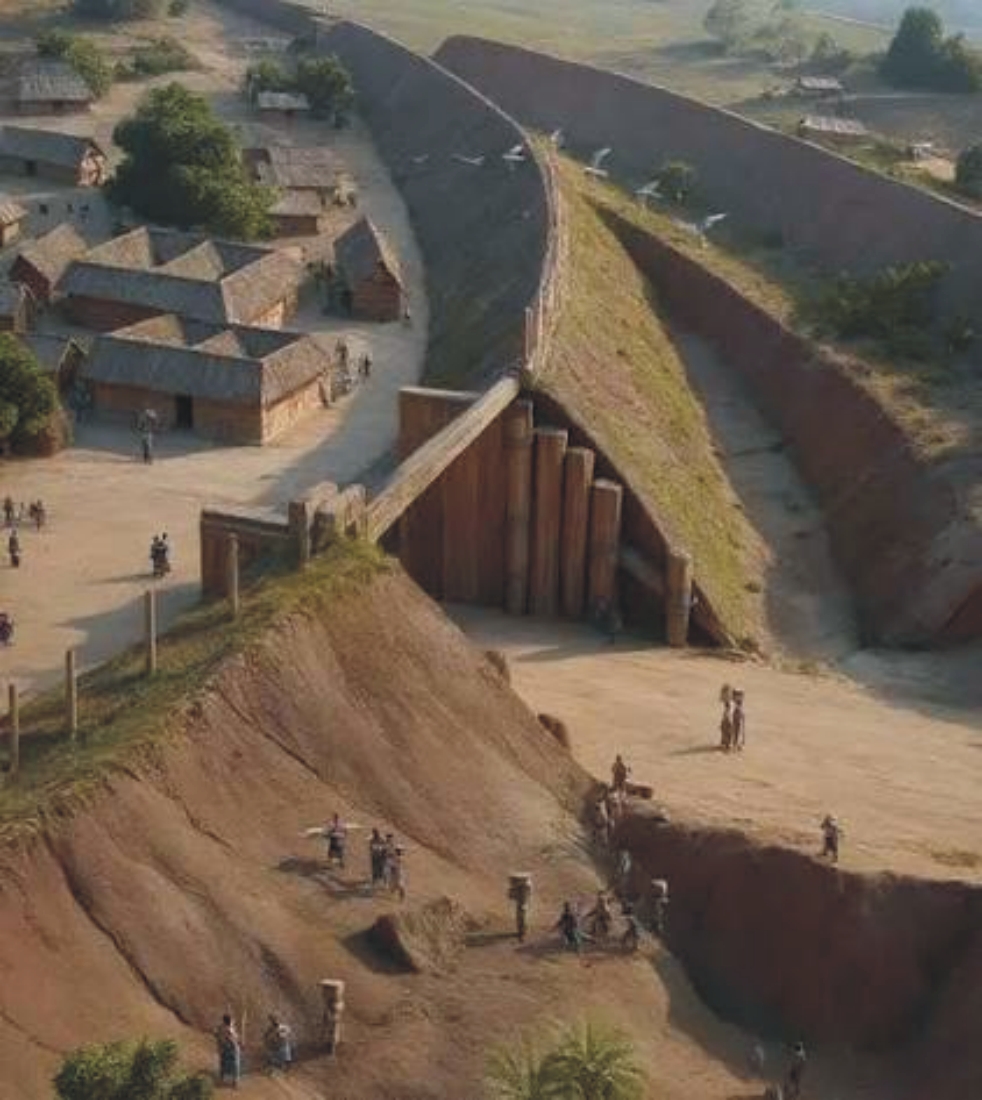
It emerged around the 11th century, metamorphosed painstaking phases into a major empire famous for its cultured urban development, what it considers divine monarchy, and mastery of bronze and brass art. Ruled early on by the Ogisos (sky rulers), then to when local chiefs invited a prince from the neighboring Yoruba kingdom of Ife to restore order, establishing the line of the Obas (kings). And Eweka I became the first official Oba of the new dynasty. Yet through these eras, it never lost its heritage, but rather deepened its monarchical resilience, ancient rituals and administrative titles, ancient earthworks, classical art works, traditional festivals and societal hierarchy. Transforming from a regional state into a vast empire. The capital, rebuilt by Oba Ewuare the Great, who constructed massive defensive walls and moats, and expanded military control across the region. Built entirely by manual labor, requiring an estimated 150 million hours of digging and soil movement, it consists of interlocking ditches and ramparts that created deep trenches and high embankments, protecting it from outside invasion. The kingdom maintained strong trade controls in palm oil, ivory, pepper, and textiles with the European merchants, including the Portuguese and Dutch starting in the late 1400s.
After centuries of political peak, then came the British punitive expedition and invasion of Benin Kingdom in 1897, where they looted its capital and dispersed its iconic Benin Bronzes worldwide. That singular act destroyed Benin Kingdom structure which was severely compromised and damaged. Since then, the ancient Benin Kingdom has been suffering the consequence of modern civilization. What we now see has never matched the ideas created by existed realities passed down to this generation through told stories. And yet, the heritage we were born into is fast eluding us as different promises and roadmaps posited have never live to see the light of the day.
Needless to say that it is heart wrenching whenever we hear of countries and cities that survive on revenue generated through tourism. Whenever I visit the palace, Igun or the moat, to name but the least, I drift into deep thought wondering when and how Benin City could become an education or tourist destination like cities like Rome that boasts of site like Colosseum, Sofia that has Patriarchal Cathedral St. Alexander Nevsky, Istanbul with Hagia Sophia, Amsterdam with its Rijksmuseum…
In October 2018 when Governor Obaseki initially proposed building a museum project during the Oba’s birthday, the Benin kingdom and Benin history lovers erupted with joy, anticipating a resuscitation and rehabilitation of Benin cultural heritage. We envisaged the ancient Benin kingdom evolving into a tourist destination; the emergence of a modern Benin kingdom. There were pure emotional and intellectual weight as the arrival of metal plaques, carved ivories, and royal stools back to Benin City seemed eminent. And the hope of developing architectural ancient heritage sites like the Benin Moat into vibrant cultural and economic assets in sight. As an independent historian, I could begin to imagine a new Benin heritage not as a static glance backward, but as a living, contested renaissance. The essential expectation being to spark heritage tourism, create local jobs, protect unique premechanical history, and boost community pride.
However, the glimpses of hope started diminishing in July 2021 when the cold war broke out publicly after the Oba of Benin demanded that repatriated artifacts be handed directly to the palace. A position that challenged Governor Obaseki’s museum and trust housing plans. The governor’s intents which bear on the palace interest became a bone of contention between the state government and the palace of the Oba of Benin kingdom. Actually, the dispute didn’t bother on whether the Benin artefacts looted during the British invasion of Benin in 1897 should return to Nigeria, and then Benin City its ancestral home, as both parties, I mean the former Edo State Governor Godwin Obaseki acting on behalf of the state government and the Oba of Benin backing the interest of the palace and ancient city of Benin at large, supported restitution. The impasse bothered on who should have authority and control over the returned artefacts, and in extension where and how they should be preserved and displayed.
While Governor Obaseki’s administration supported a modern public museum through the establishment of the Edo Museum of West African Art (EMOWAA), a world-class museum and cultural district in Benin City that would involve international partnership, the Oba of Benin, Oba Ewuare II passionately believes that the original ownership and custodianship of Benin bronze rested with the Benin monarchy. I believe that Governor Obaseki’s administration’s argument stems from the facts that not only did Edo State’s intervention help in accelerating international restitution, but also the works belonged to the Edo people and Nigeria. And on the other hand, the Oba of Benin vehemently posits that the artefacts were created within the Benin Kingdom, and many looted directly from the Royal Palace. He strictly wanted a Benin Royal Museum, associated with the Royal Palace, the principal home and custodian of the returned artefacts.
Not interested in holding argument for any of the parties, every Bini person and historians like myself watched keenly and made silent prayer for our fast eroding heritage and hope while the war went on till the Federal government finally intervened in March 2023, recognizing the Oba of Benin as the rightful owner, custodian, and manager of the repatriated artifacts through a journal. Not wanting to hold argument as a result of the outcome, I simply said, “Yes! The fight is over”. And for an ordinary Bini person, “no winner, no vanquish”. Though the Museum of West African Art (MOWAA) was listed as number 25 among the top 52 travel destinations for 2025 by The New York Times, we are yet to explore and use the facility. Maybe, on personal opinion though, due to bureaucratic bottle necks. Who, to our rescue?
Then another million-dollar question, “What’s Next”. For me?
To Preserve and Present Benin Ancient History to the world?
Again, another thought-provoking question, “How”.
At least to be able to place the ancient city of Benin Kingdom alongside other ancient civilizations.
I might not have an immediate answer, but I believe learning from others can be immensely helpful, even it means doing so at my expense.
And the questions I hope to unravel in the near future remains: –
• How did each civilization communicate its history to later generations?
• How historical narratives are presented to visitors
• How traditional heritage is incorporated into tourism
• How governments and communities protect historic sites
• How archaeological discoveries are documented
• How historical sites generate economic activity
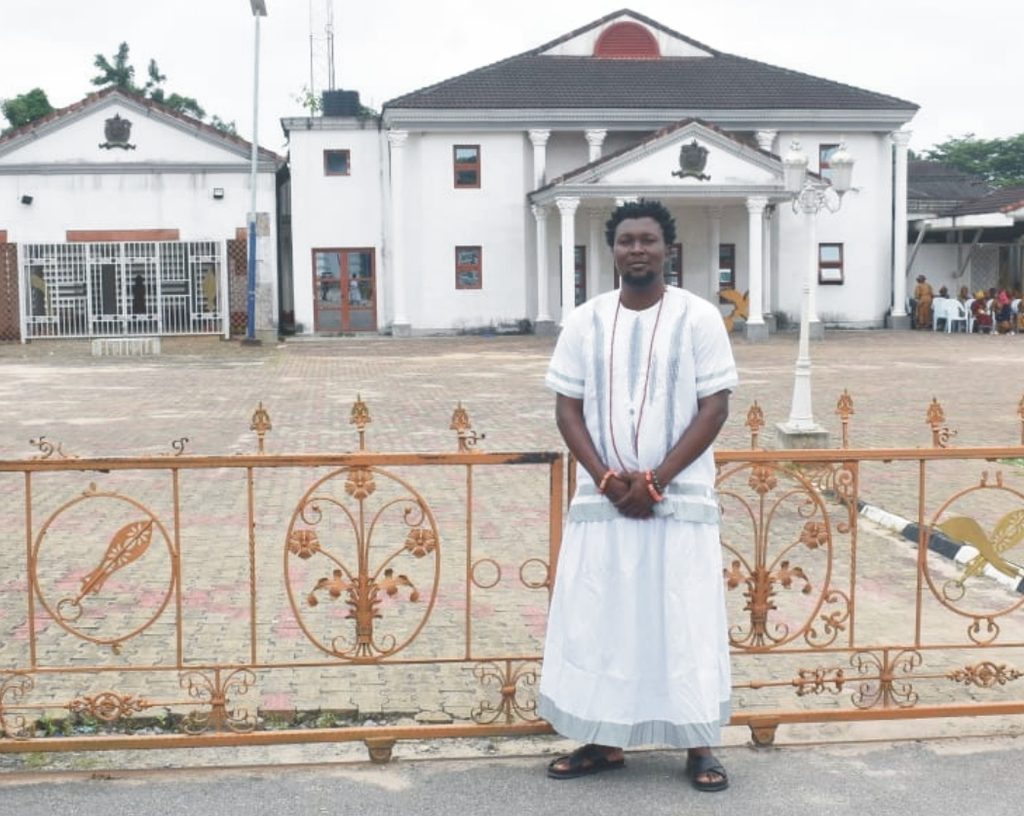
Aibuedefe Humphrey Usunobun, An Independent Historian