
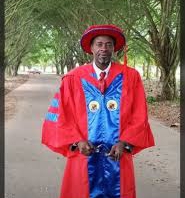
By Dr. Patrick Akhere Ebojele
Ijeoma Osamor’s article, “Edo Governor, Sen. Monday Okpebholo: Think Again,” is not advice. It is a lengthy sermon on humility delivered with the confidence of someone who came looking for faults and found insinuations instead. If criticism were a road project, her article would have broken ground, held a commissioning ceremony and gone home without laying a single block.
Her opening argument, “Announcements are not results,” sounds reasonable. Nobody disputes that. But if announcements are not results, neither are sweeping accusations evidence. Edo has reopened Anegbette General Hospital after 19 years, Obayantor after 22 and Usugbenu Cottage Hospital after five. The Central Hospital Annex runs 24-hour services, and modern equipment has been supplied to all 36 secondary health facilities. Osamor concedes that some areas deserve recognition but somehow forgets to mention them. Perhaps praise was not on the agenda.
“Look at the roads.” We have looked, and there is quite a bit to see. In about 15 months, the administration initiated about 28 road projects covering an estimated 255 kilometres across all 18 local government areas. The 2026 budget earmarked about N305 billion for road projects.
Residents of Evbuotubu have commended the completed 6.5-kilometre Ekhenwan-Siluko road for restoring economic activity. More than 23 kilometres of the Benin-Sapele corridor is being rebuilt with concrete pavement, while completed sections are easing motorists’ journeys. A 26-kilometre road in Edo Central will link Awo to its railway station.
Apparently, the roads are expected to do more than connect communities. They must also connect Osamor to a favourable opinion of the administration. Until then, every kilometre completed may remain invisible to her.
“Look at the schools.” The Deputy Governor says more than 5,000 teachers have been recruited and dilapidated school buildings renovated. At the reopening of Oredo Girls Secondary School, the Governor said the school now has more than 20 teachers, compared with the two or three he once saw.
Monthly subvention to Ambrose Alli University rose from N41 million to N500 million, while Edo University, Iyamho, saw an increase from N25 million to N250 million.
These figures may not settle every question about education, but they deserve more than a passing glance. A critic who demands results should at least acknowledge the numbers before reaching for the red pen.
“Ask ordinary Edo people.” More than 600,000 residents are enrolled in the Edo State Health Insurance Scheme, which has covered over 2,011 surgeries and 674 childbirths. The state recruited 1,376 health workers and absorbed 126 contract staff. Salaries are paid regularly, a 13th-month salary was paid in December 2024, and the N75,000 minimum wage is in force.
The recruitment of teachers and health workers, alongside vocational and digital skills programmes through EdoJobs, the Industrial Training Fund and development partners, also speaks to employment and skills development.
Of course, no administration should expect applause merely for doing its job. But neither should it be condemned as though nothing has been done.
“Do people feel safer?” Between March and May 2026, the Edo State Police Command reported 119 arrests and the rescue of 58 kidnapping victims. In February, a joint operation arrested 113 suspected kidnappers across Edo Central. Suspects in the Vegetable Market kidnapping were arrested within 24 hours. In July, a joint team rescued three Ambrose Alli University students abducted in Ekpoma.
The state has also asked the Chief Judge to establish special courts for kidnapping and cultism cases.
Security remains a serious concern, and arrests alone do not end the problem. But while Osamor offers anxiety, the administration points to arrests and rescues. Both the remaining challenges and the reported progress deserve scrutiny.
“Who is really advising you?” This is where the article begins to sound like a guessing game. It names no adviser, identifies no specific bad decision and cites no failed policy. Instead, it suggests that anyone defending the government must be a flatterer.
Edo Specialist Hospital secured full residency accreditation in Obstetrics and Gynaecology, Family Medicine and Dentistry. Edo also won a $1 million Bloomberg Philanthropies Mayors Challenge award. These achievements are not proof that every policy is flawless, but neither can they be waved away as the work of flatterers.
“Learn from Anenih and Oshiomhole.” Governor Okpebholo was elected on his own promises. He does not need to become a carbon copy of his predecessors. Osamor’s lengthy detour into media friendships also raises a question: is this really about governance or about who gets access to the microphone?
“Don’t treat critics as enemies.” The Governor should welcome honest criticism, and critics should support their arguments with evidence. But criticism without specifics is little more than a loud knock on a door without saying who is outside.
As for the closing bravado, “come after me, I dey here,” nobody has come after anyone. She has simply been answered.
The people will have the last word, as Osamor says. Governor Okpebholo can let them speak. Until then, the record deserves to be examined, the shortcomings addressed and the achievements acknowledged. Even a critic should know that a balance sheet has two sides.
Dr. Ebojele has his PhD in Public Administration and is the Chief Press Secretary to Governor Monday Okpebholo of Edo State