
The9JaTREND
c…Gunmen storms ADC secretariat, Odigie-Oyegun’s residence
…We got intelligence of attack – Odigie-Oyegun
…APC, Edo Govt deny complicity, ADC, Atiku, Akpata, Owie react
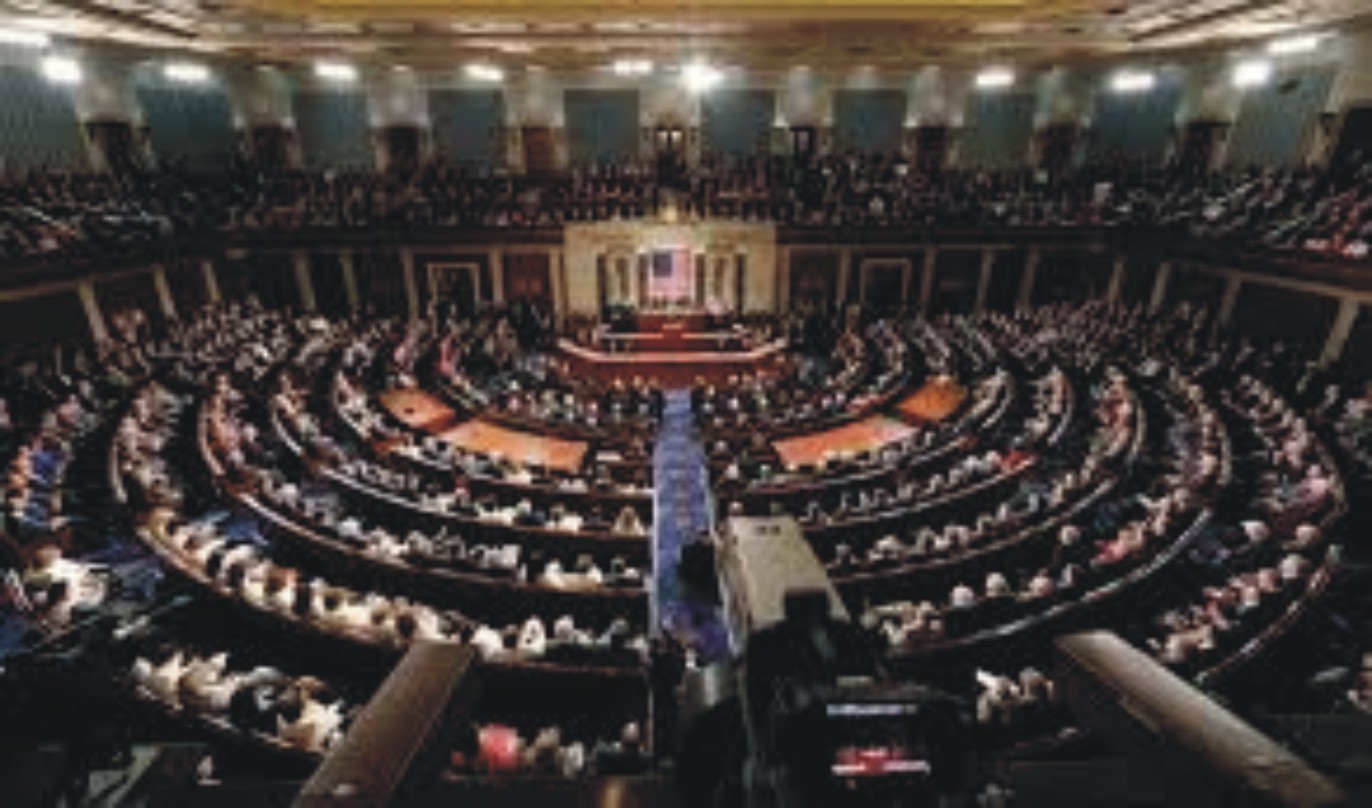
The US Congress has suggested measures to address the escalating persecution of Christians in Nigeria, calling for strengthening of the country’s institutions, including improving policing, enhanced anti-money laundering methods, and support for legal reforms.
Recall that President Donald Trump had set up a Rep panel to investigate torture of Christians in Nigeria and submit the report to him.
The Federal Government in a swift reaction, said Nigeria had no policy on religious persecution, describing the development as an opportunity for deeper engagement and broader cooperation between both countries.
But the US lawmakers, for the umpteenth time, urged the US president to invoke and announce the Country of Particular Concern, CPC, presidential directive to name and shame perpetrators of violence against Christians, implement sanctions against the individuals, and continue its on-going visa restrictions against perpetrators.
The recommendations put forward by the Congress, in conjunction with House Foreign Affairs Committee and House Appropriations Committee, followed months of investigations into alleged Christian genocide in Nigeria after Trump redesignated Nigeria as a Country of Particular Concern.
Insisting that Nigeria was the deadliest place in the world to be a Christian, the lawmakers called for repeal of sharia codes and blasphemy laws in Nigeria’s northern states, which had been used to silence dissent and target minorities.
They urged the Trump’s administration to leverage its position to compel Fulani herdsmen to disarm, potentially by blocking beef exports to countries such as Ghana, South Africa and Senegal.
To counter the influence of extremist groups, the lawmakers called on the government to allow farmers engage in legitimate self-defence and also implement programmes to disrupt terrorist financing networks.
Additionally, the Congress recommended divesting from Russian military equipment for American military equipment and countering Chinese influence in Nigeria, especially “their destabilising practice of paying protection money to Fulani militias.”
They further recommended that the US should require a “GAO audit report” on the effectiveness of aid to Nigeria to ensure transparency and accountability in the use of funds.
The lawmakers urged the US government to withheld certain U.S. funds, pending demonstrable action by the Nigerian government to stop violence against Christians, while working with international partners, including France, Hungary, and the United Kingdom to end the atrocities against Christians.
In an accompanying statement to the recommendations, the lawmakers said: “Findings after decades of persecution, Nigeria is the deadliest place in the world to be a Christian. Christians are subject to ongoing violent attacks from well-armed Fulani militias and terrorist groups, resulting in the death and murder of tens of thousands of Christians, including pastors and priests, the destruction of thousands of churches and schools, as well as kidnappings.
“Blasphemy laws in Nigeria’s northern states are used to silence speech and dissent, target Christians and minorities, and justify so-called ‘convictions’ without due process.
“President Trump’s bold action, and attention from Congress, has created a once-in-a-generation opportunity for real change to address this two-decades-long crisis.”
They tasked the Nigerian government to demonstrate the political will, including by allocating their own financial resources, to immediately reduce and then eliminate the violence.
“The United States and Nigeria should take this moment to redefine a new strategic partnership to make America and Nigeria safer, stronger, and more prosperous,” they added.
The Recommendations
*Strike a bilateral agreement between the United States and the government of Nigeria to protect vulnerable Christian communities from violent persecution, eliminate jihadist terror activity in the region, further economic cooperation, and counter adversaries in the region, including the Chinese Communist Party and Russian Federation. Such an agreement should include: commitments by the government of Nigeria to:
- Co-fund donor-supported humanitarian assistance, including through faith-based organisations, and to prioritise underserved communities of Internally Displaced Persons, IDPs, and their host communities, especially in the predominantly Christian Middle Belt region;
- Support and respond to early-warning mechanisms to prevent attacks and kidnappings, including deploying sufficient and capable security forces to the Middle Belt to enable rapid and effective response, and hold those who ignore the warnings accountable;
- Remove Fulani militias from confiscated, productive farmland and enable the voluntary return of displaced communities to their homes, including ensuring security and infrastructure, thereby reducing the need for humanitarian aid and generating economic development through increased agricultural productivity;
- Continue and expand security cooperation with the United States, including divestment of Russian military equipment for American military equipment through sales and financing.
- Technical support to the government of Nigeria to reduce and then eliminate violence from armed Fulani militias, including developing a demobilisation, disarmament, and reintegration programme to address illicit weapons and support safer communities while allowing farmers to engage in legitimate self-defense:
- Supporting the new Ministry of Livestock, ranching plans, and meaningful land reform efforts; and enhancing the recruitment, technical capabilities, and willingness of the security forces and military to prevent and respond to violent attacks.
- Comprehensive counter-terrorism cooperation to rid the region of foreign terrorist organizations that pose a direct threat to the American homeland, including through the provision of excess defence equipment and use of relevant drawdown authorities.
- Counteract the hostile foreign exploitation of Chinese illegal mining operations and their destabilising practice of paying protection money to Fulani militias.
Speaking on the recommendations in a statement posted on his X handle, Rep Riley M Moore, said: “Following today’s (yesterday) productive meeting at the White House, I want to thank President Trump for redesignating Nigeria as a Country of Particular Concern and for his administration’s commitment to protecting our brothers and sisters in Christ from persecution and addressing the broader security challenges plaguing Nigeria.
“Since President Trump redesignated Nigeria as a CPC and tasked me to lead a congressional investigation, I have worked diligently with my colleagues to produce the report we presented today.
“I also want to thank House Appropriations Committee Chairman, Tom Cole, Vice Chair, Mario Diaz-Balart, Foreign Affairs Committee Chairman, Brian Mast, and Congressman, Chris Smith, for their leadership on this comprehensive investigation and delivering this report to the White House.
“I travelled on a bipartisan delegation to Nigeria and saw with my own eyes the horrific atrocities Christians face, and the instability the Nigerian government must combat.
“Through Congressional hearings, expert testimony, meeting with Internally Displaced Persons, hearing from religious leaders, and engaging with high-level Nigerian government officials, we have provided a clear picture of the threat environment in Nigeria and the horrific persecution Christians face.
“This report outlines concrete steps to impose accountability measures, counter radical Islamic terrorism, and lays out a plan to work in coordination and cooperation with the Nigerian government to bring security to all the people of Nigeria.
“Our brothers and sisters in Christ have suffered in silence for too long. The world is now watching, and I urge the Nigerian government to take the opportunity to deepen and strengthen its relationship with the United States.
“Doing so is in the interest of both our great nations. Together, we must address these pressing security challenges and bring an end to violence against Christians.”
No policy on religious persecution, FG replies US Congress
Replying the US Congress yesterday, the Minister of Information and National Orientation, Mohammed Idris, said in a statement that the Federal Government had taken note of the recommendations contained in the report submitted to the White House by the House Foreign Affairs Committee and the House Appropriations Committee.
While acknowledging that parts of the country continued to grapple with serious security challenges, including terrorism, banditry and communal clashes, the minister stressed that the violence confronting Nigeria was not rooted in state policy or religious bias.
“Nigeria does not have, and has never had, a state policy of religious persecution,” he said, adding that the ongoing security threats stemmed from complex factors such as terrorism, organised criminality and longstanding communal tensions.
The minister expressed deep concern over the loss of lives and destruction of property caused by criminal elements, extending sympathies to victims and their families “regardless of faith, ethnicity or region.”
Reaffirming Nigeria’s constitutional commitment to religious freedom, Idris noted that the Constitution guaranteed freedom of religion and worship for all citizens and assured equal protection under the law.
To address the evolving security landscape, he said the government hads strengthened coordinated military and law enforcement operations in affected areas.
According to him, counter-terrorism offensives have significantly degraded the operational capacity of armed groups, disrupted kidnapping networks and led to the arrest and neutralisation of key criminal actors.
He disclosed further that intelligence sharing and inter-agency collaboration had been enhanced to improve early warning systems and rapid response mechanisms, particularly in vulnerable rural communities.
As part of renewed security strategies, the minister said surveillance and clearance operations had been intensified in forested areas long exploited by criminal groups.
He said specially trained forest guards had also been deployed to deny terrorists and bandits safe havens, bolster territorial control and reinforce community-level security presence.
These efforts, according to him, are being supported by increased investments in modern equipment, mobility assets and technology for the armed forces and other security agencies.
Beyond security operations, Minister Idris highlighted ongoing humanitarian interventions for internally displaced persons, as well as initiatives aimed at facilitating the safe return of affected communities and promoting peacebuilding efforts to ensure sustainable coexistence.
“The Federal Government will continue to engage international partners through appropriate diplomatic channels while remaining focused on its primary duty -the protection of all Nigerians,” he added.
US pressure on Sharia risks tension in Nigeria — CAN
Reacting to the report yesterday, Christian Association of Nigeria, CAN, warned that calls by a United States congressional panel for Nigeria to repeal Sharia and blasphemy laws could heighten religious tension and destabilise the country.
Instead of scrapping Sharia provisions, the Christian body is advocating a fresh, people-driven constitution, arguing that only a new constitutional framework, not piecemeal amendments, could fairly reflect Nigeria’s complex religious and ethnic realities.
Speaking to Vanguard in confidence because of the sensitivity of the matter, a senior CAN official said international pressure must be handled carefully and responsibly.
“This is a very sensitive issue. If you look at the process required to amend the Constitution, you will see that it could create serious tension.
“At one of the recent meetings of the Nigeria Inter-Religious Council, NIREC, some Muslim clerics strongly argued that Sharia was a way of life and part of the culture of certain northern communities, and, therefore, cannot simply be repealed or removed from the Constitution.
“That is why we believe this matter must be handled with a high level of responsibility and wisdom. If it is mishandled, it could destabilise the country.
“Religion is extremely sensitive, and there are ignorant and extremist adherents in both the Christian and Muslim communities. So even how this issue is discussed in the media requires great care.
“However, rather than focusing on repealing Sharia law, what we have consistently advocated is the need for a new constitution for Nigeria.
“The country needs a truly people-driven constitution that accommodates the interests of every segment of the nation. All religions should be carried along fairly, and ethnic and minority concerns must also be properly addressed.
“We must not also allow anyone to hide under Sharia to perpetrate wrongdoing. At the same time, we are not saying Sharia is unimportant. Our concern is that some people exploit it to justify various abuses.
“Our position is that Nigeria needs a new constitutional framework, one that genuinely reflects the will of the people. We believe the foundation of the 1999 Constitution is flawed, having originated from military rule, and that amendments alone may not fix the deeper problems.
“Rather than repealing specific laws, we are calling for a new constitution that accommodates all interests. Where Sharia is recognised, other faith-based legal systems, such as canon law, should also be guaranteed and protected within the constitutional framework,” the CAN official said.